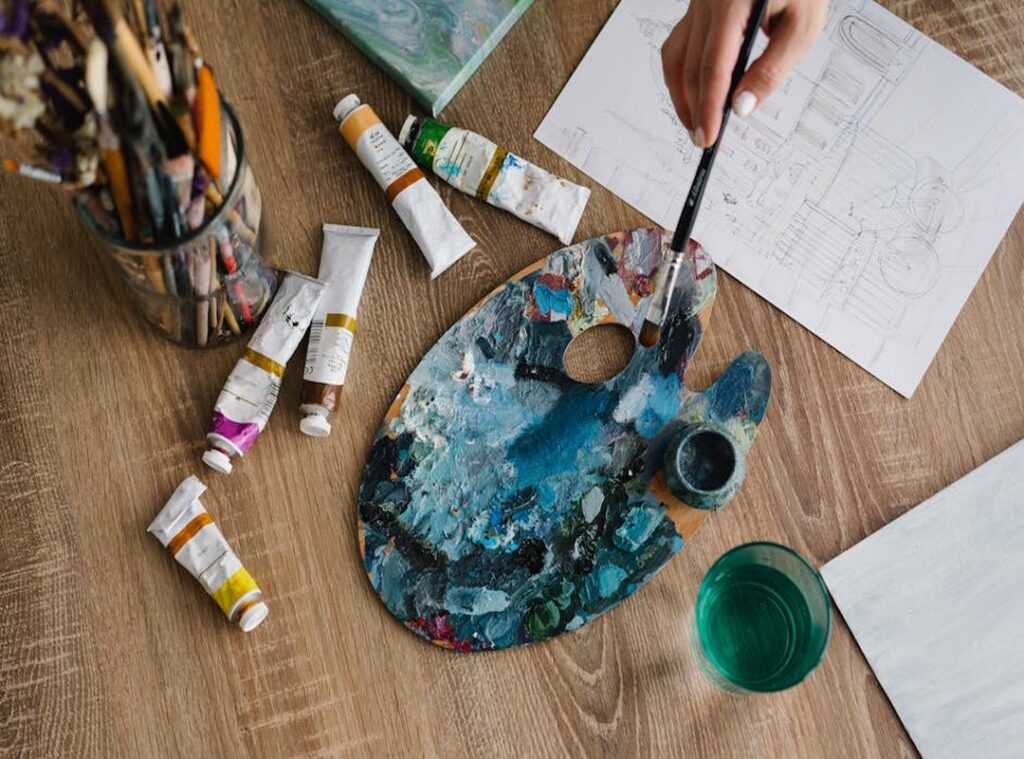
You’ve seen that painting. The one where the brushstrokes look like they were thrown on in anger.
Then you turn the page and land on something smooth, polished, built over six months by three assistants and a master who never touched the final surface.
That difference isn’t just about style. It’s about who made it (and) how much of themselves they left behind.
Direct Painting Definition Arcyhist isn’t a fancy term for “painting fast.” It’s a method. A choice. To apply paint directly to the support, without underdrawing, without layers of glaze, without waiting for anything to dry.
I’ve read hundreds of artist letters where they argue about this. I’ve pored over studio notes from 1948 where Pollock crosses out “sketch” and writes “no plan” instead. I’ve studied XRF scans showing zinc white laid down in one go (no) build-up, no correction.
This isn’t academic nitpicking.
It changes how we read art history. Who gets credit? What counts as “finished”?
When does an era actually end?
Most textbooks treat direct painting as a 20th-century rebellion.
They’re wrong.
It’s older. Messier. More deliberate than people admit.
This article traces that line (from) early Renaissance outliers who skipped cartoons, to Impressionists who painted outdoors wet-on-wet, to the moment critics stopped calling it “rough” and started calling it “true.”
You’ll get clarity. Not theory. Not jargon.
Just what direct painting is, why it mattered then, and why it still matters now.
Alla Prima Isn’t Just Wet-on-Wet
I used to think alla prima meant slapping paint on wet canvas and calling it a day. (Turns out that’s just one narrow slice.)
It’s Italian for “at first attempt.” Not “no layers,” not “no drawing,” not even “no drying time.” Just: one go.
That’s why Arcyhist matters. It tracks how the term got flattened over time.
En plein air? Painting outside. Not the same thing.
Impasto?
Thick paint. Also not the same thing. Direct painting?
That’s the broader idea (working) with minimal mediation between eye, hand, and surface.
A threat to craft.
French academics in the 1840s hated that idea. They called it crude. Unrefined.
Courbet’s The Stone Breakers (1849) got slammed. Not just for showing laborers, but for the raw, unvarnished brushwork. You see the drag of the brush.
You feel the weight of the shovel. That physical evidence scared them.
That’s what “direct” really meant then: no polite translation. No academic smoothing.
Today we confuse it with speed. Or oil-only technique. Wrong.
Direct Painting Definition Arcyhist cuts through that noise.
You want truth in the mark? Start there.
Not with rules. With resistance.
Direct Painting Before It Had a Name
I used to think direct painting started with Manet. Turns out I was wrong.
Velázquez painted Las Meninas in 1656 and left brushstrokes visible on purpose. Not as a mistake. Not as haste.
As a choice. That’s not illusion. It’s confrontation.
Van Eyck didn’t glaze because he had to. He did it because he knew thin layers could make light vibrate. He treated the surface like a collaborator (not) just a window.
Infrared scans show Titian changed his mind on the canvas. A hand moves. A drapery shifts.
Those pentimenti prove decisions happened in paint. Not just in sketches.
So why wasn’t this called “direct painting” back then? Because the idea didn’t exist yet. The Direct Painting Definition Arcyhist came later.
Much later.
It’s like calling a skateboarder “postmodern” before postmodernism existed. The act was there. The label wasn’t.
People assume old masters were all about hiding their process. They weren’t. Some just hid it better than others.
Or maybe we stopped looking closely enough.
You’ve seen those museum labels that say “workshop of” or “follower of.” What if half those attributions are wrong (not) because of skill, but because we misread their confidence?
They weren’t waiting for permission to be bold.
The Modernist Turn: Paint as Proof
Manet’s Olympia (1863) didn’t just shock people. It slapped them awake.
Those flat, unblended passages? They weren’t mistakes. They were declarations.
Paint is stuff. Not a veil. Not a window. Direct Painting.
I remember standing in front of it at the Musée d’Orsay. Feeling the grit of the white paint on her shoulder. You can’t ignore the material anymore.
That’s the rupture.
This wasn’t just about brushstrokes. It tied into bigger ideas: phenomenology (what you see, not what you know), anti-academicism (screw the Academy’s rules), and the artist stepping out of the servant role. Suddenly, the painter wasn’t translating reality.
They were testing it.
Monet painted haystacks over and over (not) to document seasons, but to track how light hits paint. Sargent painted society portraits with the same speed and immediacy (but) his goal was social recognition, not optical truth.
Same method. Opposite aims.
That confusion lasted decades. Then Roger Fry’s 1910 catalogue dropped. For the first time, someone called directness virtuous.
Not sloppy. Not unfinished. Intentional.
You’ll find more context. And actual examples (in) the Newest Painting Directory.
It’s where I go when I need to double-check whether a given work leans into directness or just looks rushed.
“Direct Painting Definition Arcyhist” isn’t some dusty footnote. It’s the hinge.
Before it? Illusion ruled.
After it? The hand mattered more than the subject.
Direct Painting: What “Alla Prima” Really Hides
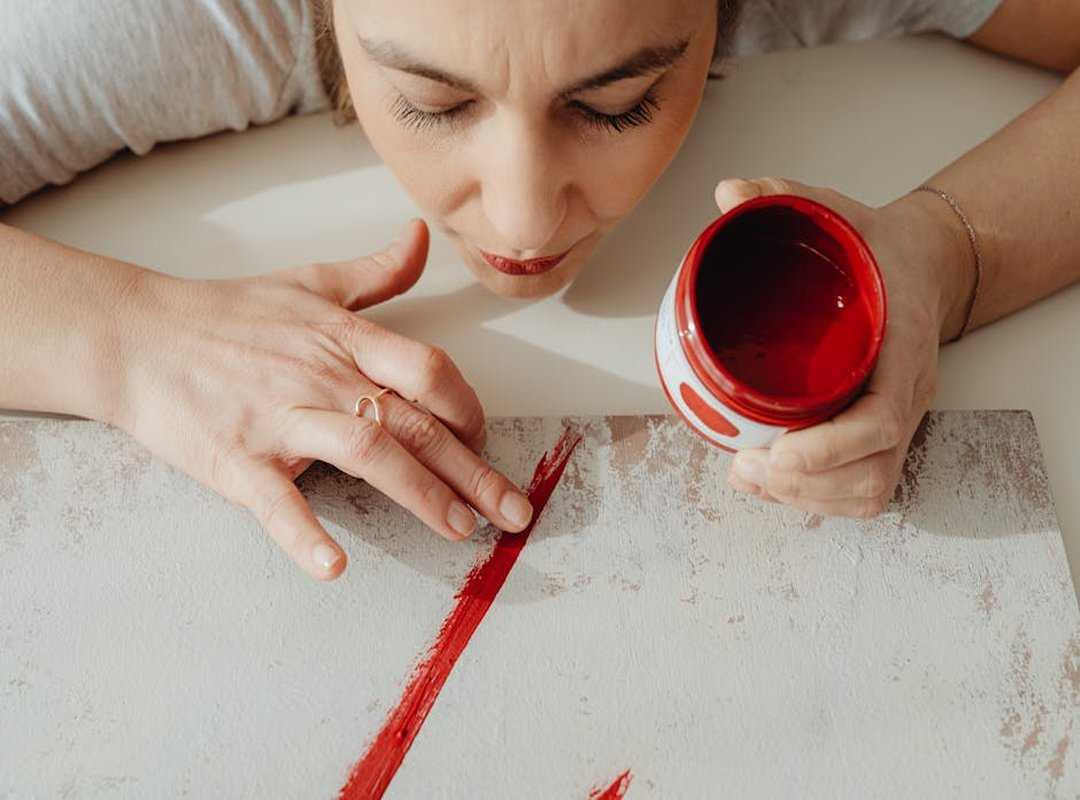
I’ve scraped paint off cross-sections under a microscope. More than once.
You think “direct painting” means no reworking. That’s wrong.
Direct Painting Definition Arcyhist treats alla prima like a binary. Yes or no (but) the lab says otherwise.
Take de Kooning’s Woman I. In 2017, conservators peeled back layers. Not two or three.
Over twenty. Thick impasto, wiped away, repainted, scraped again. All in one go.
No drying time between passes.
That’s not “built up over weeks.” It’s built up in hours. Or days. With constant revision inside a single intent.
Museum labels still say “painted alla prima” like it’s gospel. They don’t mention the sanding. Or the pentimenti buried under titanium white.
Why does it matter? Because valuation shifts. A “direct” de Kooning sells for more.
Conservation changes too (cleaning) a surface that’s actually twenty surfaces deep? Risky.
And scholarly interpretation? You can’t talk about artistic agency without seeing the struggle underneath.
I watched a curator argue for thirty minutes about whether those layers counted as “direct.” They do. But only if you stop defining directness by time. And start defining it by intent.
The paint doesn’t care what the label says.
Why Direct Painting Matters Right Now
I stand in front of a painting and ask: Did the hand move here?
That’s the first test.
Try this: pick any artwork in a museum gallery. Give yourself 60 seconds. Look for visible brush direction, pigment texture you can almost feel, and edges that don’t hide behind smoothness.
Those are cues of direct painting.
It’s not about speed. Philip Guston’s 1952 oils took months. But no underpainting.
No glazes. No digital layer masks. Just paint, applied, seen.
Compare that to a photorealistic digital piece online. High resolution doesn’t equal honesty. Guston’s surface tells you how he thought.
The digital file tells you how well the software rendered light.
That shift changes everything.
You’re not just learning to see what’s painted. You’re learning how meaning gets built. Stroke by stroke, decision by decision.
The Direct Painting Definition Arcyhist page clarifies this fast, without academic fog.
If you want real-time examples (like) how a new mural in Lisbon uses direct methods while rejecting illusion. I track those weekly in the Arcyhist Fresh Art.
Paint Is History (Not) Just Image
I used to treat paint like decoration. Until I stopped looking at what it showed (and) started reading what it said.
Velázquez left a thumbprint in wet pigment. Pollock dripped on purpose. Neither was hiding.
Both were declaring: this is where I chose to be visible.
That’s the heart of Direct Painting Definition Arcyhist.
You don’t need more brushes. You need fewer assumptions.
So this week. Go see one painting in person. Not online.
Not zoomed. Stand close. Ask: Where did the artist choose not to hide?
Your eye will catch what your brain missed.
Every visible stroke is a historical document waiting to be read.
You already know which painting is calling you.
Go look. Then come back and tell me what you found.