
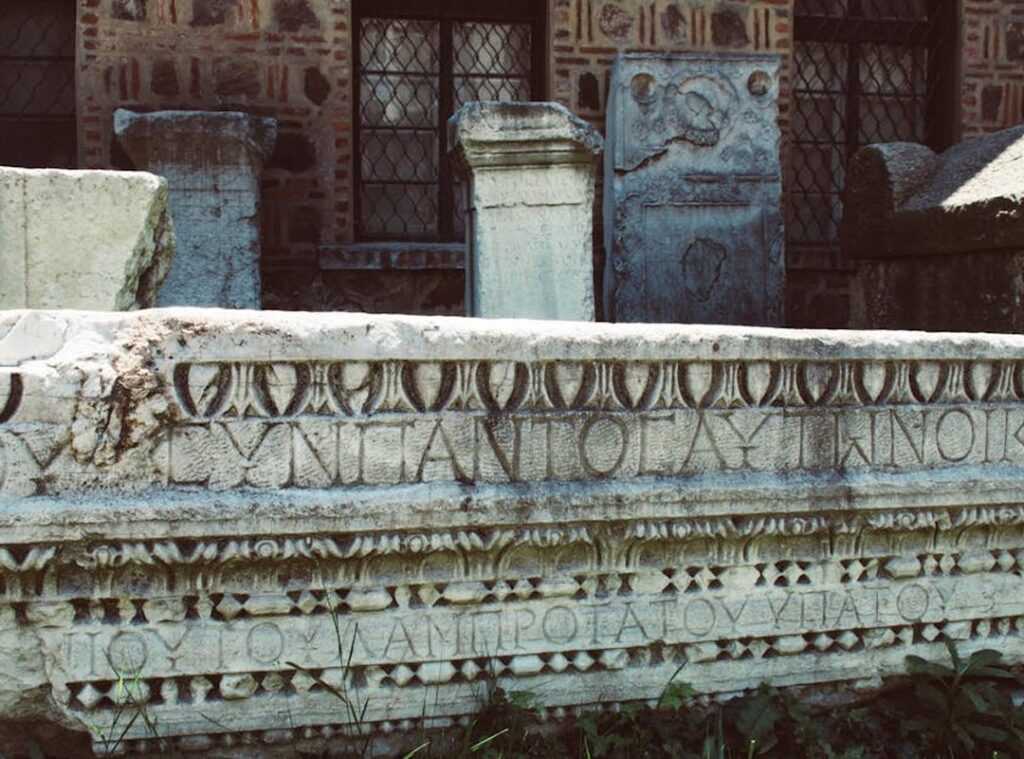
History is written by the victors, but what about the stories they erased?
You’ve felt it. That nagging sense that the history you learned in school is missing something big.
I’ve spent years digging through forgotten texts and listening to oral traditions most historians ignore.
This isn’t speculation. It’s research (deep,) messy, and grounded in actual sources.
Most people don’t know what Arcyhist even means. Or why it matters now.
But here’s the truth: those erased stories aren’t just interesting. They’re urgent.
I’m not selling mystery. I’m showing you where the gaps are. And how to fill them.
You’ll walk away knowing exactly what Arcyhist is.
And why these lost narratives hit harder today than ever before.
No fluff. No gatekeeping. Just what you asked for.
Defining the Shadows: What Really Counts as Arcane History?
Arcane means secret. Mysterious. Known by few.
Not because it’s complicated. But because someone hid it.
I’ve spent years digging through archives where whole shelves were mislabeled or left uncataloged. Not by accident. By design.
So arcane history isn’t about wizards or crystal balls. (Though yes, some of it involves those.)
It’s about suppressed science (like) Nikola Tesla’s notes on resonant frequency that vanished after his death. Or the 19th-century Black herbalists whose remedies were outlawed and erased from medical records.
It’s the Freemason minutes from 1782 that mention solar geometry in temple layouts (not) as myth, but as applied engineering.
And it’s definitely not conspiracy theory. Conspiracy theories start with “What if?” Arcane history starts with “Here’s the ledger. Here’s the lab notebook.
Here’s the letter they tried to burn.”
That’s why I built Arcyhist (to) treat these fragments like evidence, not folklore.
Think of arcane history as the deleted scenes of our past. Same plot. Different ending.
You know the textbook version of the Industrial Revolution? Now imagine the version where women inventors’ patents were reassigned to male supervisors (and) how many of those documents are still sealed.
Or the 1947 Roswell crash report that was declassified… except for two pages. Those pages exist. They’re just not public.
That’s the line. Not speculation. Not fantasy.
Real records. Real gaps. Real consequences.
The work isn’t about proving aliens existed. It’s about asking why certain questions got labeled “unserious”. And who decided that.
Arcyhist is where that work lives. No gatekeeping. Just sources.
And footnotes you can check.
Whispers from the Past: Three Things We Let Burn
I’m not talking about myths. I’m talking about knowledge that existed, got written down, and then got erased (on) purpose.
The Library of Alexandria wasn’t just a big building with books. It held syncretic knowledge. Greek geometry next to Egyptian medicine next to Jewish cosmology (all) cross-talking in real time.
That fusion didn’t survive the fires or the slow decay. What came after? A flatter, narrower Western thought.
Less dialogue. More dogma.
You think Newton invented physics in a vacuum? Nope. He spent more time on alchemy than on gravity.
His notebooks are full of mercury experiments, divine geometry, and transmutation formulas. Alchemy was chemistry before it had lab coats. And it was banned from the story later (because) it didn’t fit the “rational hero” narrative.
That’s not speculation. The Newton Project has published over 7 million words of his private writings. Most of it is alchemical.
(Yes, really.)
Then there’s Nag Hammadi.
In 1945, a farmer in Egypt cracked open a jar (and) out spilled 13 leather-bound codices. Gnostic gospels. Not the ones you heard in Sunday school.
These showed early Christians arguing fiercely about whether the material world was divine or a trap. Whether salvation came through ritual (or) direct experience.
The winners buried those texts. Literally. Then they rewrote the history.
We call that “heresy.” But heresy is just the version of truth someone else lost the power struggle over.
It’s why I keep going back to the Arcyhist latest painting directory from arcyart. Not because it’s pretty. But because it’s a working archive.
One that refuses to flatten complexity into a single style or era.
Most art histories skip the messy overlaps. The borrowings. The suppressed lineages.
I don’t.
You ever wonder what else we’ve forgotten (not) by accident. But because it made someone uncomfortable?
What if your textbook left out half the conversation?
What if the “standard version” is just the last one standing?
That’s not conspiracy talk. That’s archaeology. That’s source work.
That’s reading the margins.
And that’s where Arcyhist lives.
The Gatekeepers: Why Was This Knowledge Hidden?
I used to think lost knowledge just… faded. Like old photos left in the sun.
It didn’t.
People locked it away.
Religious and political powers didn’t just prefer certain stories. They burned the others. The Roman Empire scrubbed rival cosmologies.
The medieval Church labeled dissent “heresy” and called libraries “dangerous.” That wasn’t caution. It was control.
You know what got called “superstition”? Anything that didn’t serve the new boss.
The Enlightenment didn’t just celebrate reason. It threw out everything that couldn’t fit in a lab notebook. Herbal medicine?
Folk astronomy? Dream logic? Gone.
Labeled primitive. Forgotten.
Then there’s the brute-force kind of loss.
The Spanish conquest didn’t just kill people. It fed Mayan codices into bonfires. One fire.
One library gone. Oral traditions snapped like dry twigs.
No backup. No cloud. Just silence.
That fragility isn’t ancient history. It’s how knowledge dies today. Slowly, without fanfare.
We act like information is permanent. It’s not. It’s held by people.
Stored on drives. Written on paper that yellows and crumbles.
Arcyhist isn’t a database. It’s a refusal to accept that silence as normal.
I’ve watched experts dismiss whole systems because they don’t match current models. That’s not rigor. That’s laziness.
Why do we still treat “old” as synonymous with “wrong”?
What if the thing we call superstition was just data we stopped collecting?
You’ve felt this. That itch when a textbook skips three centuries. That pause when a source says “no records remain.”
Yeah. Me too.
We keep pretending knowledge flows forward in a clean line.
It doesn’t. It leaks. It gets buried.
It gets stolen.
You Already Know the Story Is Incomplete
I’ve shown you where the gaps are. You felt that itch when you read about “official” history. That quiet doubt.
The one you brush off because it’s easier to believe the textbook.
It’s not about rejecting history. It’s about asking who held the pen. Who got erased.
Who benefited from silence.
The past isn’t fixed. It’s layered. And Arcyhist is how you start peeling it back.
You don’t need permission to question.
You just need a place to begin.
So (what’s) your first move? The Gnostic Society Library is online right now. John Dee’s digitized notebooks are free to browse.
Or pick any event you think you know cold (the) Magna Carta, the 1929 stock crash, the invention of the printing press (and) ask: Whose voice is missing?
That question changes everything. It shifts you from passive reader to active investigator. You stop accepting.
You start uncovering.
Most people never go further than the surface.
They call it “history.”
I call it a curated version.
Your curiosity didn’t bring you here by accident.
It’s telling you something real.
Don’t just read about it. Become an explorer. Start today.
No gatekeepers. No credentials needed. Just you, a question, and the truth waiting underneath.
Go.